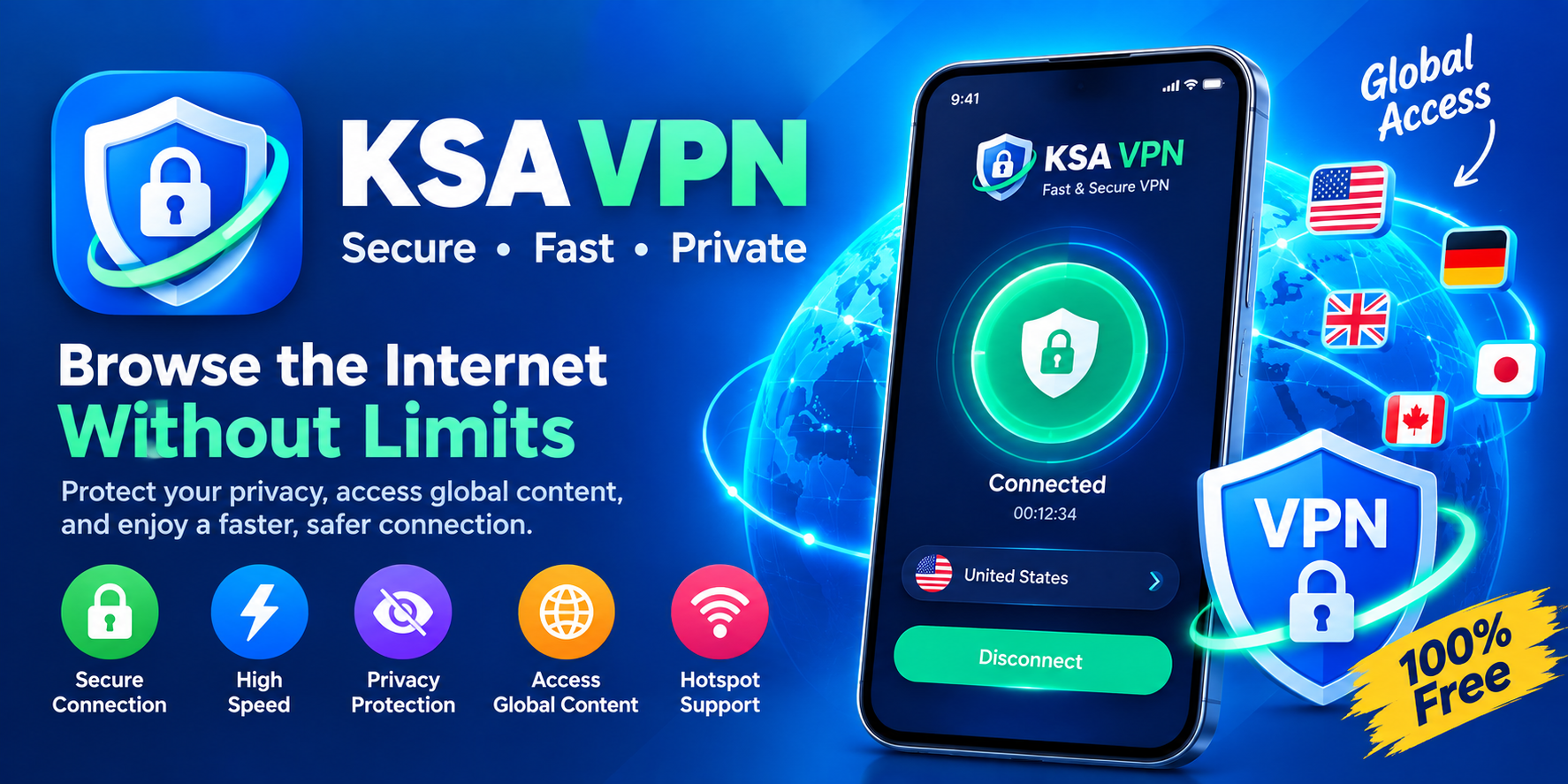
Let's be honest about why most people download a VPN: they want to keep their browsing private. That's exactly what Saudi Arabia VPN (also listed as KSA VPN) promises on Google Play, with bold claims about strong encryption, a strict no-data-collection policy, and seamless one-tap protection. With over 2,000 reviews and a polished description, it looks like a trustworthy solution for anyone in the Gulf region worried about digital snooping. But dig a little deeper, and you'll find a trail of contradictions that every potential user should understand before installing it. This isn't just a review of features—it's a cautionary tale about reading the fine print.
What the developer claims on the surface.
The Google Play listing for Saudi Arabia VPN paints an appealing picture. The developer, Kuipers Libertas B.V., states that the app uses "industry-standard protocols" to encrypt data from your device to "secure VPN endpoints," protects your IP address on public Wi-Fi, and offers a global server network optimized for speed. The "Transparency & Compliance" section is particularly emphatic: it claims the app is built on the official Android VpnService, does not promote illegal content, and—most importantly—"does not collect or share personal and sensitive user data without your explicit, in-app consent". The Data Safety section on Google Play reinforces this, declaring "No data collected" and "No data shared with third parties". On paper, it sounds like the gold standard of privacy-first VPNs.
The first red flag: what independent analysis actually found.
Here's where things get uncomfortable. An independent Exodus Privacy report, which performs static analysis on Android APK files, examined a version of this app and found two trackers with advertising signatures. Trackers are pieces of code designed to collect data about your usage—the exact opposite of what a privacy tool should contain. The report also flagged nine permissions, including several classified as "Dangerous" or "Special" by Google's own protection levels, such as RECEIVE_BOOT_COMPLETED (run at startup) and WAKE_LOCK (prevent phone from sleeping). While Exodus notes that finding tracker signatures isn't definitive proof of active data collection, it directly contradicts the developer's public claim that no data is collected. At the very least, users deserve an explanation for why an ad tracker is embedded in a "privacy-first" application.
The "no data collected" claim doesn't match user experience.
If you scroll through the Google Play reviews, a pattern emerges that no amount of marketing copy can explain away. One recent reviewer wrote: "worse VPN ever, lost my money for premium subscription. it's not responding for any especially KSA which is the name of the app". Another complained about severe speed issues: "it's very slow. calling vision it's not clear and i can't download or watch movies from Netflix". These aren't just performance gripes—they suggest a gap between what the app advertises and what it actually delivers. When you're paying for a premium subscription and the core function (connecting to the advertised region) doesn't work, the value proposition collapses entirely. And if the app truly collected "no data," it's worth asking why a VPN would need advertising trackers at all.
The developer's portfolio raises its own questions.
Kuipers Libertas B.V., based in Hilversum, Netherlands, isn't just behind Saudi Arabia VPN. The same developer publishes Keepm Secure, another VPN app with an almost identical description and the same promise of free, unlimited protection. On the iOS App Store, Keepm Secure's privacy disclosure tells a different story than its Android counterpart: it states that usage data may be used to track you across apps and websites owned by other companies, and that other data types may be collected and linked to your identity. This inconsistency is telling. If the developer's iOS apps openly acknowledge tracking and data collection, why should users believe the Android version's "no data collected" declaration is any more reliable? It suggests a pattern of tailored disclosures designed to meet the minimum requirements of each platform, rather than a genuine commitment to privacy.
The "data can't be deleted" clause deserves scrutiny.
One line in the Google Play Data Safety section is easy to overlook but carries significant weight: "Data can't be deleted". For a VPN app, this is a striking admission. If no data is collected, as the developer claims, there would be nothing to delete—so why does the policy state otherwise? This clause typically appears when an app collects some form of persistent identifier or usage data that isn't tied to a user account and therefore can't be removed on request. Combined with the presence of advertising trackers found by Exodus, it strongly suggests that something is being retained, even if the developer won't specify what. In the context of a privacy tool, this ambiguity is unacceptable.
A better way to think about free and low-cost VPNs.
Saudi Arabia VPN fits a familiar mold: it's free to download, offers a premium tier, and makes sweeping privacy promises that don't hold up under inspection. This isn't to say that all free VPNs are malicious, but the economics matter. Running VPN servers costs money. If an app isn't charging enough to cover those costs through subscriptions, it must find revenue elsewhere—often through advertising or data analytics. The trackers found in this app's code suggest that's exactly what's happening here. For users who genuinely need a VPN for privacy or accessing region-locked content, a reputable paid service with clear auditing and a proven no-logs policy is almost always the safer choice. The few dollars a month you save with a dubious free VPN can come at a much higher cost to your personal data.
The bottom line: don't let a reassuring name fool you.
Saudi Arabia VPN has a name that implies regional specialization, a description that sounds professional, and a privacy policy that reads like a dream. But the evidence doesn't support the marketing. Independent analysis found advertising trackers. The developer's own iOS apps admit to tracking and data collection. User reviews describe broken connections and poor performance after paying for premium. And the Data Safety disclosure contains the ominous phrase "Data can't be deleted". If you're looking for a VPN to protect your privacy, this app hasn't earned your trust. The most private thing you can do is keep looking.